Health · Healthy aging
Why Headlights Feel Brighter Every Year After 60, and the One-Capsule Morning Habit Some Drivers Are Trying
Night driving that used to be easy now means squinting into glare. Menus need the phone flashlight. A plain look at what changes in the eye with age, what a yellow pigment at the back of the eye has to do with it, and what the research does and does not show.
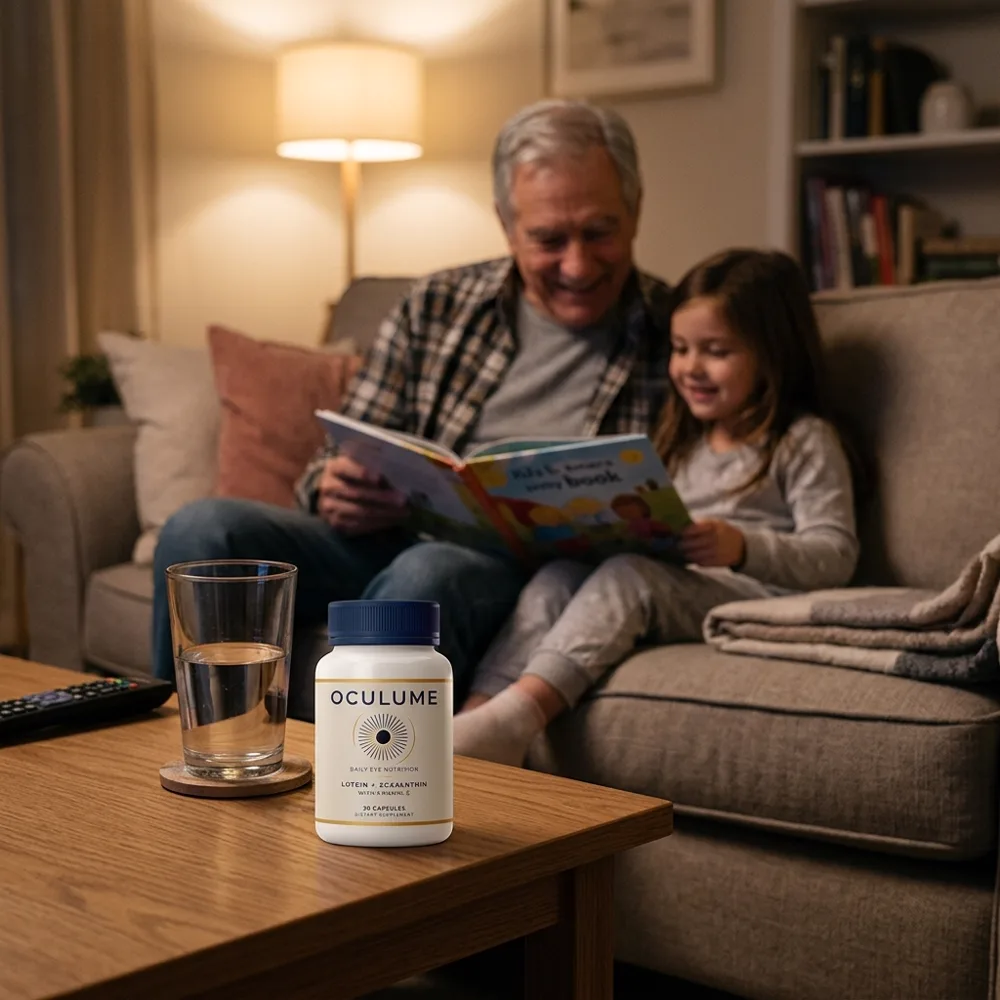
Frank, 72, stopped driving after dark last winter. "It wasn't one thing," he says. "The headlights coming the other way just got brighter every year. I'd get home with my eyes burning."
Then it was the menu at his granddaughter's birthday dinner. "I had to hand it to my wife. That's when I thought, this is how it starts."
If you have noticed the same things, glare at night, small print that swims, eyes that tire in front of the TV, you are not imagining it, and you are far from alone.
The yellow shield at the back of your eye
At the center of your retina there is a small spot called the macula, the part you use to read, recognize faces and drive. It is protected by a yellow pigment made of two nutrients, lutein and zeaxanthin, which work a little like built-in sunglasses: they filter harsh blue light and help with glare.
Your body cannot make lutein or zeaxanthin. They come from food, mostly leafy greens and egg yolks, and many older adults eat far less of them than they think. With age, that natural shield can thin.

What the glare study found
In 2008, researchers Stringham and Hammond published a study in Optometry and Vision Science: people who took lutein and zeaxanthin for several months built up more of that pigment, and handled glare better and recovered from bright light faster on the tests used.
It was a small study and it measured glare, not a cure for any eye disease. But for anyone who dreads oncoming headlights, it is a finding worth knowing.

The bilberry story, told honestly
You may have heard that British pilots ate bilberry jam during the war to see better at night. It is a good story. When researchers reviewed the placebo-controlled trials in 2004 (Survey of Ophthalmology), they did not find convincing evidence that bilberry improves night vision.
Bilberries are still rich in natural antioxidants called anthocyanins, which is why they are in many eye formulas. We would rather tell you what the research says than repeat a legend.

Putting it together: one capsule after breakfast
There is a capsule that combines lutein and zeaxanthin with wild arctic bilberry, astaxanthin and vitamin C, taken once a day after breakfast. Lutein and zeaxanthin dissolve in fat, so taking them with a meal helps the body absorb them.
It is not a treatment and it does not replace your glasses or your eye exams. The pigment builds slowly, over months, so this only makes sense if you give it time. Results vary from person to person.
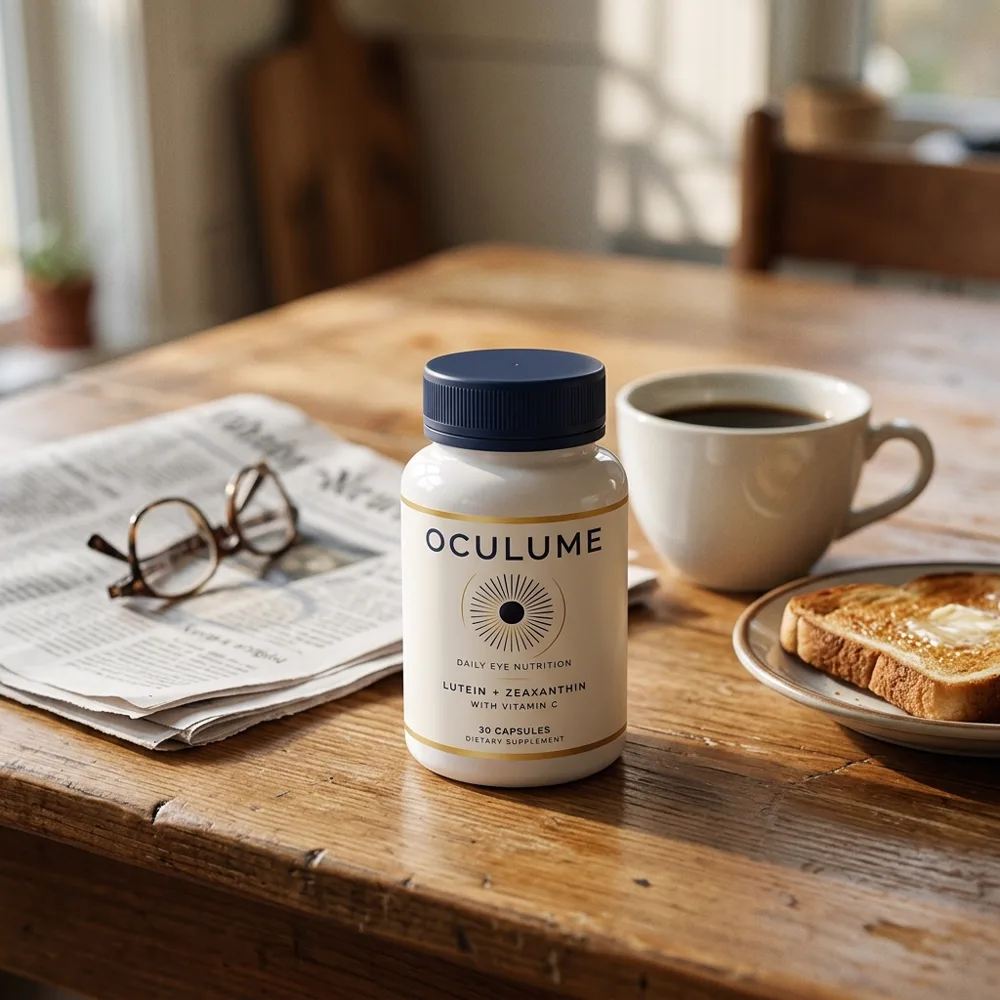
The formula: Oculume Daily Eye Nutrition
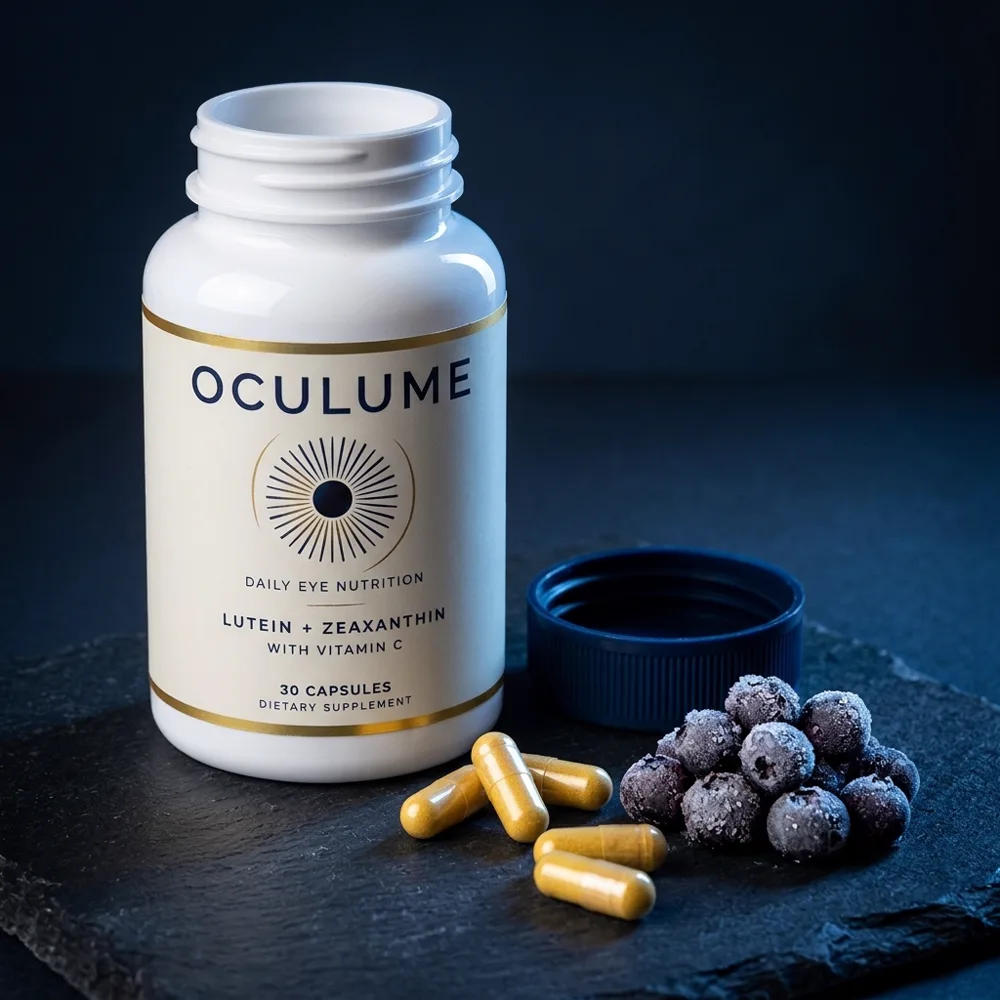
Oculume is a dietary supplement that supports healthy vision and eye comfort, as part of a balanced routine.*
- Lutein and zeaxanthin
- Wild arctic bilberry
- Astaxanthin
- Vitamin C
- One capsule a day after breakfast, 30 capsules per bottle
See today's Oculume prices →90-day money-back guarantee · Free US shipping
Where to get Oculume
Oculume is sold only through its official checkout. Most people choose three bottles: the eye's pigment builds over months, not days.
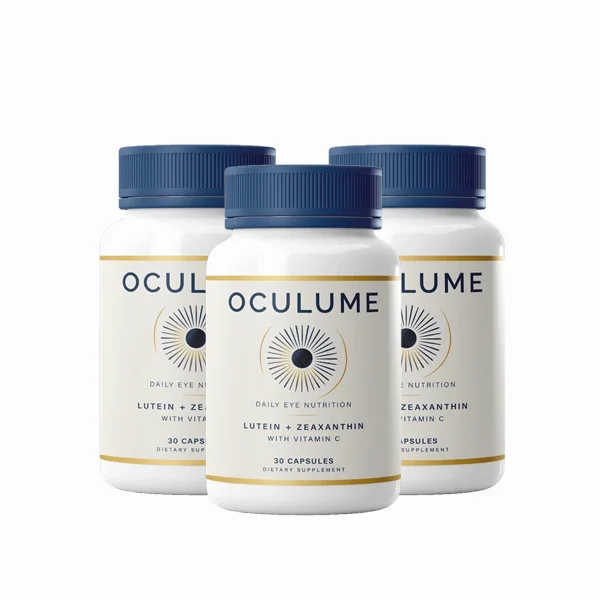 3 bottles$99 total$33 per bottle · 3-month supply
Choose 3 bottles
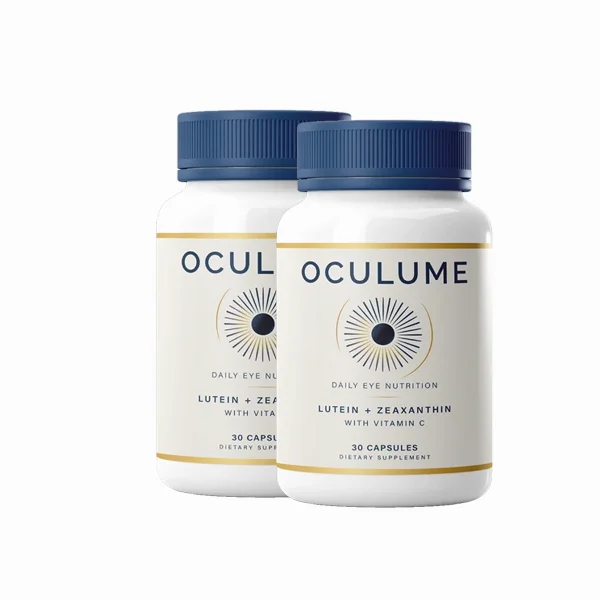 2 bottles$89 total$44.50 per bottle
Choose 2 bottles
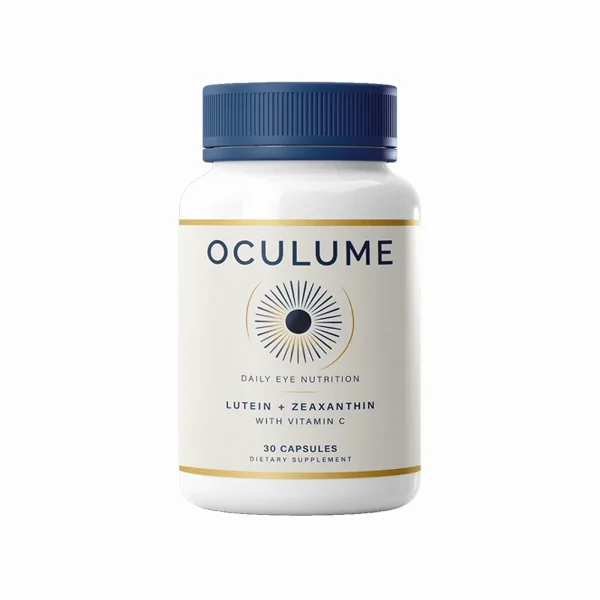 1 bottle$79 total1-month supply
Choose 1 bottle
Free US shipping. Your order includes automatic refills every 28 days at your package price until you cancel; cancel anytime by e-mail. Express shipping and a protection add-on are optional at checkout: untick them to pay only your package price.

90-day money-back guarantee
If Oculume is not right for you, e-mail [email protected] within 90 days of your purchase with your order number and ask for a refund.
Questions readers ask
How do I take it?
One capsule a day after breakfast, with a glass of water, or as directed on the label.
Will it replace my glasses or my eye doctor?
No. Oculume is a dietary supplement. It does not replace glasses, eye exams or any treatment your eye doctor prescribed. Sudden changes in vision need a doctor right away.
Is it safe with my medication?
Ask your doctor first if you take a blood thinner or any prescription medication, or if you are pregnant or nursing.
How soon will I notice something?
Nobody can honestly promise a date. The glare study ran for months, and results vary. The 90-day guarantee gives you time to decide.
- Stringham J.M., Hammond B.R. Macular pigment and visual performance under glare conditions. Optometry and Vision Science, 2008.
- Canter P.H., Ernst E. Anthocyanosides of Vaccinium myrtillus (bilberry) for night vision: a systematic review of placebo-controlled trials. Survey of Ophthalmology, 2004.